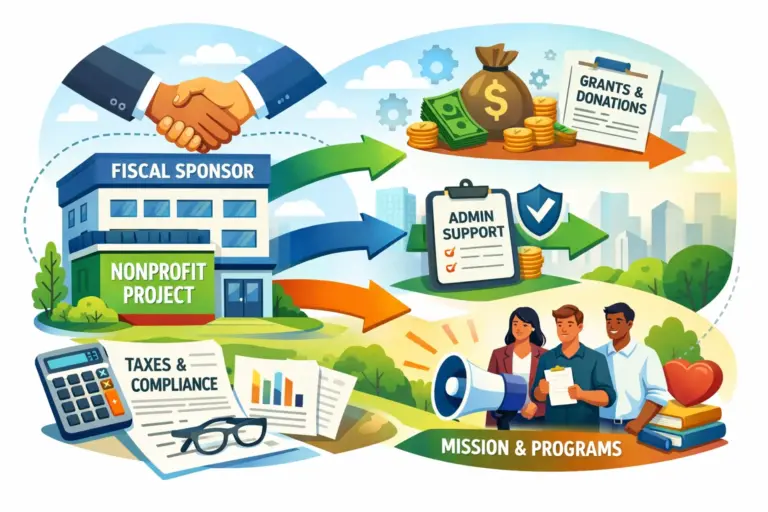


As a nonprofit leader or project coordinator, you’ve probably considered fiscal sponsorship as a way to get started quickly, access grant funding, and accept tax‑deductible donations. However, understanding fiscal sponsorship and compliance with US tax laws is absolutely critical to ensure your organization operates legally and effectively under IRS rules.
In this article, you’ll learn exactly how fiscal sponsorship interacts with US tax laws. We’ll break down regulatory requirements, fiduciary responsibilities, compliance mechanisms, and best practices to stay on the right side of the law. Plus, you’ll see how Africads Consultants supports NGOs in Kenya by providing compliance-aware digital strategies—all tailored to maximize impact while maintaining legal integrity.
A Detailed Explanation: Fiscal Sponsorship and Compliance with US Tax Laws

Fiscal sponsorship and compliance with US tax laws demands a clear understanding of how the IRS regulates charitable giving, oversight responsibilities, and financial management. Let’s dive in.
What Is Fiscal Sponsorship, Legally Speaking?
Fiscal sponsorship is a formal agreement in which a tax‑exempt nonprofit (the fiscal sponsor) allows a project or initiative without its own 501(c)(3) status to operate under its legal umbrella. Legally, the sponsor assumes responsibility for compliance with IRS tax laws, including the proper use of funds, donor restrictions, and reporting requirements. This model enables sponsored projects to accept tax‑deductible contributions immediately—provided the sponsorship structure adheres to IRS guidelines.
Also read:Fiscal Sponsorship for International NGO Programs
IRS Oversight and Guidelines
- Fiscal sponsors must maintain legal ownership and control over all funds received on behalf of sponsored projects.
- The IRS mandates strict adherence to donor intent, financial transparency, and nonprofit governance.
- Sponsors must file accurate Form 990s, handle audits, and ensure proper record-keeping to demonstrate compliance.
Key Legal Responsibilities: Fiscal Sponsors and Sponsored Projects

For the Fiscal Sponsor
- Fund Ownership & Oversight
Sponsors hold legal title to all donations and must use those funds strictly according to IRS-approved purposes and donor restrictions. - Fiduciary Responsibility
Sponsors must act in the best interest of public charity ideology, ensuring proper use of funds and preventing misuse. - Reporting & Recordkeeping
Sponsors must include all fiscal sponsorship activity in their Form 990 filings. Accurate bookkeeping and audit readiness are mandatory.
For the Sponsored Project
- Adherence to Sponsor Policies
Sponsored projects must follow the fiscal sponsor’s financial and compliance protocols, including expense documentation and reporting deadlines. - Alignment with 501(c)(3) Purposes
Activities must strictly align with charitable purposes under IRS regulations to maintain tax‑exempt status through the sponsor.
Legal Structures and Models: Model A vs. Model C in IRS Compliance

Model A: Comprehensive Fiscal Sponsorship
- Sponsor Integration
The project becomes part of the sponsor’s organization, simplifying compliance but reducing autonomy. - Tax Compliance Benefits
The sponsor directly bears IRS legal liability, ensuring unified control of donor funds and IRS filings. - Drawbacks
Smaller projects may feel less independent; they must strictly follow the sponsor’s legal compliance framework.
Model C: Pre‑Approved Grant Relationship
- Project Autonomy
Sponsored projects remain separate legal entities; the sponsor passes on funds as grants. - Compliance Responsibilities
While the sponsor verifies legal eligibility, the project assumes most operational compliance, including grant implementation. - Best For
Projects ready to self-manage but still needing tax-deductible capabilities without administrative infrastructure.
Maintaining Compliance: Internal Controls and Best Practices
Documentation and Internal Policies
- Maintain donor agreements, approval letters, and board resolutions that align with nonprofit IRS standards.
- Record retention (receipts, grants, expense reports) must meet IRS audit requirements.
Regular Oversight and Board Governance
- Both sponsor and project should hold scheduled compliance reviews.
- Ensure boards understand and fulfill legal obligations, including conflict-of-interest policies and expense reviews.
Transparency with Donors and Public Reporting
- Fiscal sponsors must openly disclose sponsorship activity in annual reports and IRS filings.
- Sponsored projects should provide regular impact and financial reports to donors in line with IRS rules.
How Africads Consultants Supports Compliance-Aware Fiscal Sponsorship
Africads Consultants deeply understands fiscal sponsorship and compliance with US tax laws, especially for Kenya-based organizations connecting with global funding ecosystems. We ensure your nonprofit adheres to US legal standards while maintaining positive digital engagement.
Also read: What Donors Need to Know About Giving to Fiscally Sponsored Projects
Our Strategic Services Include:
- Digital Storytelling with Compliance
Craft narratives that highlight responsible, IRS-compliant fund usage to donors and global audiences. - SEO and Content Marketing
Ensuring transparency and credibility in online content—a key factor for legal and donor trust. - Social Media Management
Delivering accurate, compliance-conscious updates that satisfy both public interest and IRS standards. - Capacity-Building Workshops
Educating teams on donor restrictions, documentation protocols, and reporting practices required under US tax law.
Partnering with Africads Consultants ensures your nonprofit not only leverages fiscal sponsorship strategically but also remains firmly compliant—maximizing growth without compromising legal integrity. Visit Africads Consultants to learn more.
FAQs: Fiscal Sponsorship and Compliance with US Tax Laws
- What is the sponsor’s legal responsibility for IRS compliance?
The sponsor must legally own and manage funds, comply with charitable intent, and accurately report via Form 990. - Can the sponsored project independently manage its own funds?
Only under Model C; projects remain legally separate, but still must comply with grant and IRS restrictions. - How long should records be retained under IRS rules?
At least three to seven years for financial, donor, and grant documentation. - What happens if a fiscal sponsor loses its tax-exempt status?
The project immediately loses the ability to receive tax-deductible donations—transition planning is essential. - Can donor restrictions override the sponsor’s activities?
Yes—donor restrictions take precedence and must be honored under IRS guidelines. - Do fiscal sponsors need to conduct audits for sponsored programs?
Yes, financial audits or reviews should include fiscal sponsorship activities as part of due diligence. - Can funds be used outside the project’s stated purpose?
No—IRS compliance requires funds be used only for approved project purposes. - Is it required to communicate compliance info to donors?
Yes—for transparency and legal integrity, donors should receive regular, accurate reports. - Does Africads assist with legal documentation?
While not legal counsel, Africads supports nonprofits with best-practice policies and compliance training informed by regulations. - Is fiscal sponsorship a viable path for global NGOs?
Absolutely—US-based fiscal sponsorship enables international NGO programs to fundraise legally in the US, provided compliance is carefully managed.
Navigating fiscal sponsorship and compliance with US tax laws demands diligence, transparency, and governance rigor. With expert guidance and clear digital strategy—courtesy of partners like Africads Consultants—you’ll confidently scale your mission while staying legally sound.
Conclusion
U.S. fiscal sponsorship compliance depends on the sponsor retaining control and discretion over charitable funds, limiting grants to approved charitable purposes and keeping records that show how funds were used. The IRS states this principle in Revenue Ruling 68-489; private-foundation expenditure-responsibility rules may also apply in specific cases. Source checked 3 October 2026. Obtain qualified U.S. tax advice for the actual agreement.
Put this guide into practice
Free resource: Fiscal Sponsorship Agreement Template. Use the agreement template to structure a discussion with your fiscal sponsor and adapt it to your arrangement.
Optional paid resource: Fiscal Sponsorship Toolkit. Practical documents for fiscally sponsored projects, nonprofit founders and fiscal sponsors. Review the product details and current price before purchasing.