
In today’s visually driven world, nonprofit organizations must leverage the power of photography and film to communicate their mission and impact. But how do you ensure your team has the skills to produce compelling visuals that inspire action?
To train your team for nonprofit photography and film, you must focus on skills development, storytelling techniques, technical training, and fostering creativity. Providing access to professional equipment and mentorship can elevate your team’s capabilities.
In this article, we’ll cover a detailed roadmap entailing how to train your team in photography and film. You’ll learn how to structure the training, teach essential skills, and integrate storytelling into your visuals to make your nonprofit’s message resonate.
A Detailed Explanation of Nonprofit Photography and Film Training
What Does Nonprofit Photography and Film Entail?
Nonprofit photography and film are not just about pretty pictures or well-edited videos. They are tools to:
- Showcase your impact.
- Tell authentic stories.
- Drive emotional connections with your audience.
Why Is Training Essential?
Without training, your team might miss critical moments or fail to produce content that aligns with your brand. Training ensures consistency, professionalism, and emotional storytelling, which can increase donor engagement and inspire volunteerism.
Steps to Train Your Team for Nonprofit Photography and Film

1. Identify Your Training Goals
Start by defining what you want your team to achieve. Consider:
- Telling compelling stories through visuals.
- Improving technical skills with cameras, lighting, and editing.
- Understanding the ethical considerations of nonprofit photography.
With clear goals, you can create a focused and efficient training program.
2. Invest in the Right Tools
Before diving into training, ensure your team has access to the necessary tools. These may include:
- Cameras: DSLR or mirrorless cameras like Canon EOS or Sony Alpha.
- Lenses: Wide-angle for landscapes and zoom for events.
- Audio Equipment: Shotgun mics or lapel microphones for interviews.
- Editing Software: Adobe Premiere Pro, Final Cut Pro, or DaVinci Resolve.
3. Teach Visual Storytelling
The heart of impactful nonprofit visuals is storytelling. Train your team to:
- Focus on individuals whose lives have been changed by your work.
- Capture raw emotions and moments of action.
- Use captions and voiceovers to give context.
Encourage them to answer these questions:
- Who is the subject?
- What is their challenge?
- How has the nonprofit made a difference?
4. Develop Technical Skills
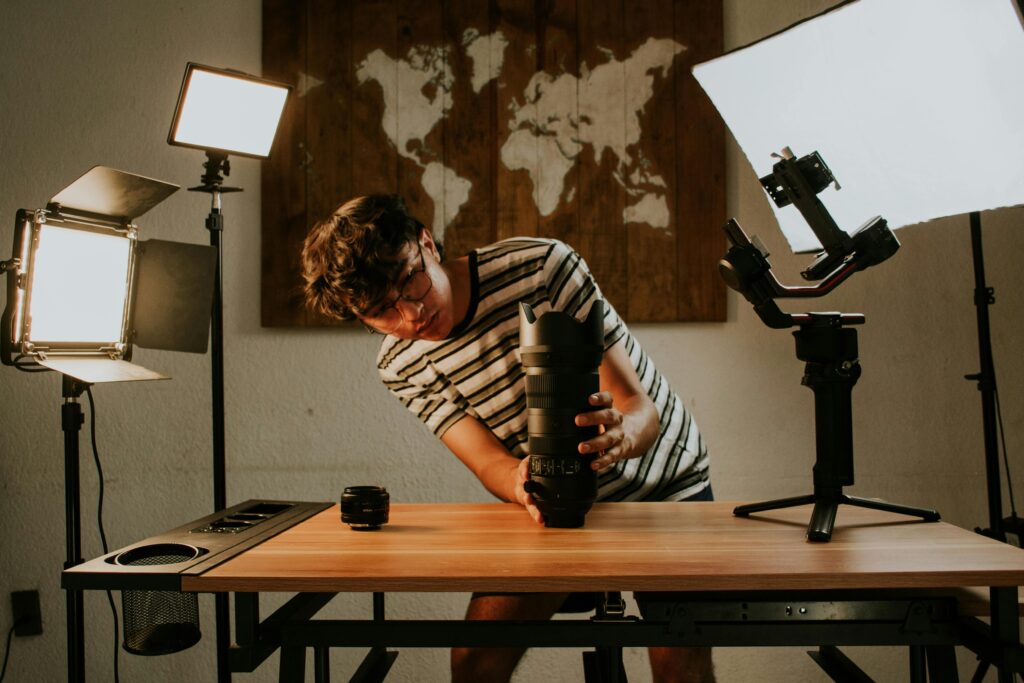
Teach the technical skills needed for photography and videography, including:
Photography:
- Composition: Rule of thirds, leading lines, and framing.
- Lighting: Understanding natural vs. artificial light.
- Focus: Using manual focus for sharp images.
Videography:
- Shot Types: Master wide, medium, and close-up shots.
- Camera Movement: Teach pans, tilts, and tracking shots.
- Audio Recording: Ensure clean audio capture during interviews or events.
Hands-on practice is essential here. Provide opportunities for the team to practice in real-world nonprofit settings.
5. Focus on Post-Production Skills
Editing can make or break your visuals. Provide training on:
- Cropping and color correction for photos.
- Adding music, transitions, and captions to videos.
- Optimizing content for different platforms (e.g., Instagram, YouTube).
6. Address Ethical and Legal Considerations
Nonprofit photography and film often involve sensitive subjects. Train your team on:
- Getting consent from individuals featured.
- Avoiding exploitative imagery.
- Representing communities respectfully.
This builds trust with your audience and protects your nonprofit’s reputation.
Techniques for Training Your Team

1. Workshops and Hands-On Sessions
Practical sessions let your team learn by doing. Host workshops on specific skills like camera handling, framing, or editing.
2. Partner with Professionals
Hire professional photographers or filmmakers to mentor your team. Their expertise can fast-track your team’s learning curve.
3. Online Courses and Tutorials
Platforms like Coursera, Skillshare, or YouTube offer affordable courses on photography and film production.
4. Encourage Peer Reviews
Have team members review each other’s work. Constructive feedback helps refine their skills and fosters collaboration.
Common Challenges and How to Overcome Them
Limited Budget
Solution: Use entry-level equipment and free or low-cost training resources.
Lack of Experience
Solution: Start small with basic projects and build skills over time.
Team Resistance
Solution: Highlight the importance of visuals in achieving your nonprofit’s mission.
How to Measure Training Success
Set measurable goals, such as:
- Producing a set number of high-quality photos or videos.
- Increasing engagement metrics on visual content.
- Successfully documenting a key project or event.
Review the team’s progress periodically and adjust the training program as needed.
Why Invest in Visuals for Your Nonprofit?
Compelling visuals are not optional—they’re essential for:
- Gaining donor trust.
- Expanding your audience reach.
- Demonstrating transparency and impact.
How Africads Consultants Helps with Nonprofit Photography and Film
At Africads Consultants, we specialize in empowering nonprofits to harness the power of storytelling through photography and film. Here’s how we can help:
- Professional Training: We offer hands-on workshops and online courses tailored to nonprofit teams.
- Ethical Guidance: Learn to navigate ethical concerns while capturing authentic stories.
- Project Support: Need help documenting a major initiative? We provide professional photography and filmmaking services.
- Custom Solutions: Whether you’re starting from scratch or need advanced guidance, we adapt to your needs.
Our mission is to ensure your visuals resonate with your audience, drive engagement, and amplify your impact.
To train your team in nonprofit photography and film is a powerful step towards amplifying your organization’s mission. By combining technical skills, storytelling techniques, and ethical practices, your visuals can inspire action and build lasting connections.
Investing in your team’s skills not only saves resources but also ensures your nonprofit’s authenticity shines through every frame.
Let Africads Consultants guide your journey—transform your nonprofit’s storytelling today!
FAQs
- What basic equipment do nonprofits need for photography and film?
A DSLR or mirrorless camera, microphones, tripods, and editing software are essential. - How long does it take to train a team?
It depends on the complexity of skills, but basic proficiency can be achieved in a few weeks. - What’s the biggest challenge in nonprofit photography?
Balancing professionalism with authenticity while staying ethical. - Why is storytelling important in visuals?
It creates emotional connections and helps audiences relate to your cause. - How can small nonprofits afford training?
Start with online courses and free resources, then grow as your budget allows. - Should nonprofits use smartphones for visuals?
Yes, they’re a cost-effective tool for beginners, especially with high-quality cameras on newer models. - What platforms are best for sharing nonprofit visuals?
Instagram, Facebook, and YouTube are excellent for engaging visuals. - How do I ensure ethical representation in visuals?
Always get consent and portray subjects with dignity and respect. - What is post-production, and why is it important?
It involves editing photos or videos to enhance quality and ensure a polished look. - Can Africads Consultants train my team remotely?Yes, we offer online training tailored to your nonprofit’s needs.


